Retail & Shopping Mall HVAC: How It Is Different and 10 Best Practices
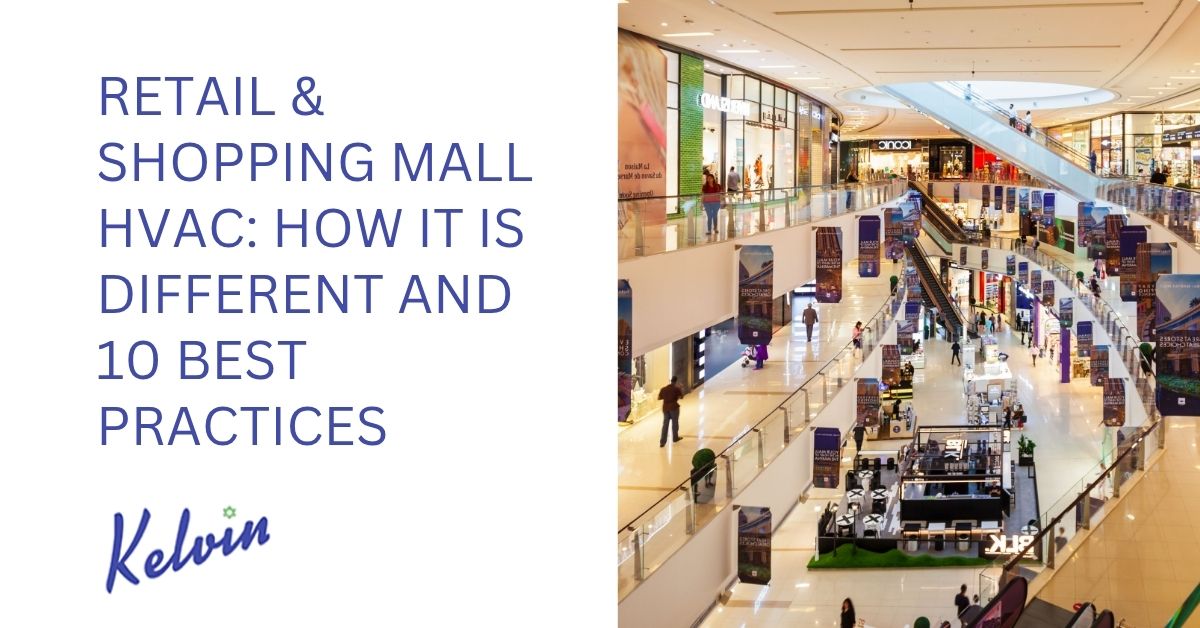
From large shopping centers and high-street retail outlets to food courts and entertainment zones, maintaining the right indoor temperature and air quality is an essential part of building management.
Unlike residential or small commercial buildings, retail and shopping mall environments have constantly changing occupancy levels, varying heat loads, large open spaces and multiple tenants with different cooling requirements. These factors make HVAC design, installation and maintenance significantly more complex than conventional air-conditioning applications.
On that note, Kelvin Air Conditioning and Ventilation Systems, a leading team of MEP contractors in India and annual HVAC maintenance contractors, decided to share this complete guide to retail and shopping mall HVAC systems, including how they differ from conventional HVAC setups and the best practices for achieving efficient and reliable performance.
So, what makes HVAC systems for retail stores and shopping malls different, and what are the best practices businesses and facility managers should follow?
How Is Retail & Shopping Mall HVAC Different?
Heating, ventilation, and air conditioning (HVAC) systems play a critical role in retail stores and shopping malls. Unlike residential or small commercial buildings, retail spaces experience constantly changing occupancy, varying heat loads, large open areas, and strict indoor air-quality requirements.
A well-designed retail and shopping mall HVAC system not only keeps customers comfortable but also protects products, supports employees, and helps businesses control energy costs.
How Is Retail & Shopping Mall HVAC Different?
HVAC systems for retail environments have unique requirements compared with standard commercial buildings.
Variable Occupancy
Shopping malls can experience thousands of visitors during weekends, holidays, and sales events, while occupancy may be significantly lower during off-peak hours. HVAC systems must adjust accordingly to maintain comfortable temperatures without wasting energy.
High and Changing Heat Loads
Lighting, electronic equipment, refrigeration units, escalators, large glass windows, and crowds can generate substantial heat. These heat loads can also vary throughout the day, requiring flexible HVAC operation.
Large Open Spaces
Shopping malls often feature atriums, high ceilings, food courts, corridors, and large retail areas. Maintaining consistent temperatures across these spaces requires careful system design and effective air distribution.
Indoor Air Quality
High visitor numbers can increase carbon dioxide levels, odors, humidity, and airborne pollutants. Proper ventilation and filtration are therefore essential for maintaining healthy indoor air quality.
Different Tenant Requirements
A mall may contain clothing stores, restaurants, supermarkets, cinemas, electronics stores, and offices. Each tenant can have different cooling, heating, ventilation, and humidity requirements.
10 Best Practices for Retail & Shopping Mall HVAC
Perform Accurate Load Calculations
Before selecting HVAC equipment, conduct detailed heating and cooling load calculations. Consider building orientation, occupancy, lighting, equipment, glazing, ventilation requirements, and peak visitor loads.
Oversized equipment can result in higher energy consumption, short cycling, and poor humidity control, while undersized systems may struggle during peak conditions.
Use Zoning for Better Temperature Control
Different areas of a shopping mall have different cooling requirements. HVAC zoning allows individual areas to be controlled according to occupancy and usage.
Variable air volume (VAV) systems, dedicated controls, and zone-level thermostats can improve both comfort and efficiency.
Install Energy-Efficient Equipment
High-efficiency chillers, rooftop units, air handling units, heat pumps, and variable-speed drives can significantly reduce energy consumption.
When selecting equipment, consider not just the initial purchase price but also lifecycle operating costs.
Implement Smart Building Controls
A Building Management System (BMS) can monitor and control HVAC equipment throughout a mall. Smart controls can automatically adjust temperature, airflow, operating schedules, and equipment performance based on real-time conditions.
Optimize Ventilation
Adequate outdoor-air ventilation is essential in high-occupancy retail environments. Demand-controlled ventilation can adjust fresh-air supply according to occupancy levels, helping maintain indoor air quality while reducing unnecessary cooling or heating.
Maintain Proper Air Distribution
Poor air distribution can create hot and cold spots. Properly positioned diffusers, return-air grilles, ducts, and air handling units help distribute conditioned air evenly throughout the space.
Special attention should be given to high-ceiling areas and large atriums.
Control Humidity
Humidity can affect customer comfort, building materials, products, and indoor air quality. HVAC systems should be designed to maintain appropriate humidity levels, particularly in humid climates.
Schedule Preventive Maintenance
Regular maintenance helps prevent unexpected HVAC failures during busy shopping periods. Filters, coils, belts, fans, dampers, ducts, compressors, and electrical components should be inspected and serviced regularly.
Preventive maintenance can also improve equipment efficiency and extend system life.
Monitor Energy Performance
HVAC can represent a significant portion of a shopping mall’s energy consumption. Track electricity use, cooling performance, temperature settings, equipment runtime, and system efficiency to identify opportunities for improvement.
Energy monitoring can help facility managers detect inefficient equipment before it becomes a major expense.
Plan for Future Expansion
Retail spaces frequently change due to new tenants, renovations, and changes in store layouts. HVAC systems should therefore have sufficient flexibility to accommodate future modifications.
Modular equipment, accessible ductwork, scalable controls, and appropriately designed distribution systems can make future upgrades easier and more cost-effective.
Conclusion
Retail and shopping mall HVAC systems must balance **comfort, indoor air quality, energy efficiency, reliability, and operational flexibility**. High occupancy, changing heat loads, large spaces, and different tenant requirements make HVAC design more complex than conventional commercial applications.
By focusing on accurate load calculations, efficient equipment, zoning, smart controls, proper ventilation, preventive maintenance, and continuous energy monitoring, facility managers can create a more comfortable environment while reducing operating costs.
A properly designed and maintained shopping mall HVAC system is ultimately an investment in customer experience, tenant satisfaction, building performance, and long-term energy efficiency.