Electrical MEP Services Explained: Power, Backup, and More
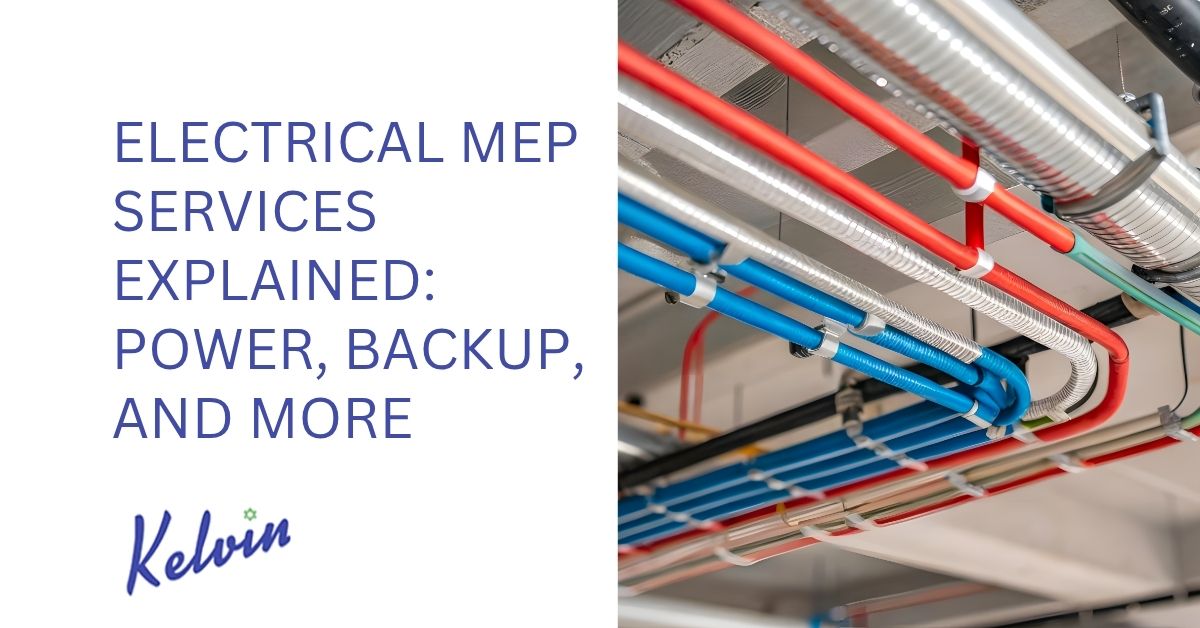
Walk into any commercial building today in India – office tower, hospital, data centre, mall. You’ll notice electricity doing more work than others ever notice. Lights, lifts, servers, HVAC, security systems, fire alarms… all of it runs on power that’s supposed to be silent, stable, and simply there. The moment it isn’t, everyone notices.
That’s the whole job of electrical MEP. Not just wiring a building but making sure power flows exactly where it’s needed, backs itself up the second the grid hiccups, and increasingly, comes from sources that don’t cost the earth (literally).
So what actually goes into it? In this blog, Kelvin Mech – a leading team of MEP contractors in Mumbai and annual HVAC maintenance contractors – will tell you everything important about electrical MEP. Let’s start!
What Does Electrical MEP Actually Cover?
MEP stands for Mechanical, Electrical, and Plumbing. The E – Electrical – is arguably the one that touches everything else. HVAC needs power. Plumbing pumps need power. Fire safety systems need power. Take electricity away and rest of the building simply stops functioning.
Electrical MEP services typically include:
- Power distribution system design and installation
- Backup power and UPS integration
- Lighting design and automation
- Renewable energy and solar integration
- Load calculation and electrical safety compliance
- Ongoing maintenance and system audits
Each of these isn’t a standalone task. They’re pieces of one system that has to work together for days and nights. Without anyone in the building giving it a second thought.
What Does Power Distribution Actually Do in Commercial Building?
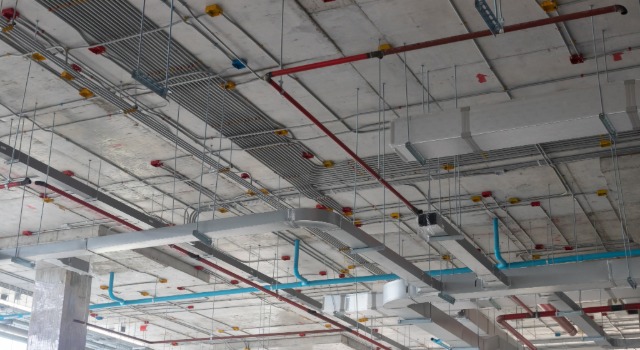
Here’s a fact most people never think about: electricity doesn’t just ARRIVE at your desk lamp or server rack. It travels through a carefully engineered path – from main incoming supply, through transformers and distribution panels and then all the way down to individual circuits.
Get this wrong and you’re not just looking at flickering lights. You’re looking at overloaded circuits, tripped breakers, and in worse cases, fire hazards.
A well-designed power distribution system will:
- Calculate the building’s total electrical load accurately
- Distribute power safely across floors, zones, and equipment
- Use protective devices (breakers, fuses, switchgear) to prevent overloads
- Separate critical loads (like server rooms or ICUs) from general loads
- Leave room for future expansion without a complete rewire
Think of it like plumbing actually. You wouldn’t run one pipe to feed an entire building’s water needs and hope for the best, right? Same logic applies here. Except instead of water pressure dropping, you get equipment failure or worse… a safety incident.
Commercial buildings especially need this planned out before construction even begins. Retrofitting a poorly distributed system later is expensive, disruptive, and honestly, avoidable.
Why Do Commercial Buildings Need Backup Power Systems?
Let’s be honest – no power grid anywhere is 100% dependable. Storms happen. Equipment fails. Maintenance windows come up unannounced. And for a commercial building, even a few minutes of downtime can mean lost revenue, spoiled inventory, or in critical facilities, actual danger.
This is where backup power systems step in. And there isn’t just one type. Depending on the building, you’re usually looking at:
- Diesel or gas generators: For longer outages, powering entire floors or buildings for hours
- UPS (Uninterruptible Power Supply) systems: Best for instantaneous gap between outage and generator kick-in
- Battery storage systems: Increasingly paired with solar for cleaner, quieter backup
- Automatic transfer switches (ATS): Unsung hero that detects an outage and switches sources in seconds
Here’s the part people miss: it’s not enough to just have a generator sitting in the basement. It needs to be sized correctly for your actual load, tested regularly, and integrated so the switch-over is seamless. A backup system that takes 30 seconds to kick in is still a system that let your servers crash.
For facilities like hospitals, data centres, or manufacturing units, this isn’t optional. It’s the difference between we had a minor blip and we lost the day’s operations.
Don’t forget to check out these resources:
HVAC system for cold chain warehouse
Server room cooling mistakes and solutions
Look for these MEP contractor qualities
How Does Renewable Energy Integration Help Commercial Buildings Save on Costs?
A few years ago, solar and renewable integration in commercial buildings was mostly a sustainability checkbox. Today, it’s becoming a straightforward business decision. Energy costs keep climbing. And rooftops that used to sit empty are now generating real savings.
Renewable integration in Electrical MEP usually involves:
- Solar PV system design based on rooftop space, orientation, and load
- Grid-tied, off-grid, or hybrid solar setups (depending on reliability needs)
- Battery storage to bank excess solar for use during peak hours or outages
- Smart energy management systems that balance grid, solar, and backup sources automatically
- Net metering setup (where applicable) to offset utility bills
Real win here? That is literally combining renewable sources with your backup power strategy. Instead of a generator that only kicks in during outages, you get a system where solar handles daytime load, batteries buffer the gaps, and generators become the last line of defence rather than the first.
It’s less backup power and more smart power. Your building manages its own energy needs rather than depending entirely on the grid.
How Does Lighting Design and Automation Quietly Cut Your Electricity Costs?
Lighting rarely gets the spotlight (pun intended) in MEP conversations. But it’s often one of the biggest recurring electricity costs in commercial buildings. Smart lighting design changes that equation considerably.
Modern lighting integration includes:
- Energy-efficient LED systems replacing older, power-hungry fixtures
- Occupancy sensors that cut power to unused rooms and corridors
- Daylight harvesting, adjusting artificial light based on natural light available
- Centralised automation so lighting schedules match actual building usage
None of this is glamorous, yes. But over a year, it adds up to a noticeably lower electricity bill without anyone in the building even noticing a difference in comfort.
Why Professional Electrical MEP Design Matters?
You could technically get by with a bare-minimum electrical setup. Plenty of buildings do. But here’s what usually happens down the line – recurring breaker trips, undersized backup system that fails exactly when you need it, and solar setup that was never actually matched to the building’s real load.
Professional Electrical MEP design and execution ensures:
- Compliance with local safety codes and standards
- Systems sized correctly for current and future load requirements
- Coordination between electrical, mechanical, and plumbing teams (so nothing works in isolation)
- Long-term maintenance plans instead of reactive firefighting
- Genuine energy savings instead of guesswork
Electrical MEP FAQs
What’s the difference between UPS and generator?
A UPS provides instant, short-term power (usually minutes) to bridge the gap the moment the grid fails. Keeping sensitive equipment like servers running without interruption.
A generator takes longer to start up but can supply power for hours or days. Most commercial buildings use both together. UPS for the immediate switch. Generator for sustained backup!
How much backup power does a commercial building actually need?
It depends entirely on your critical loads. A hospital needs backup for life-safety systems and equipment; an office building may only need it for servers, lifts, and emergency lighting. A proper load calculation (not a guess) determines the right generator and UPS capacity for your specific setup.
Is solar integration worth it for commercial buildings in India?
In most cases, yes. Commercial electricity tariffs are high, and rooftop space in commercial buildings is often underused. With the right system sizing, solar can meaningfully cut monthly electricity costs, and pairing it with battery storage adds backup capability too.
Can renewable energy fully replace grid power for a commercial building?
Technically possible with an off-grid setup, but rarely practical for most commercial buildings. A hybrid approach (solar plus grid plus backup) usually makes more financial and operational sense than going fully off-grid.
How often should electrical systems be inspected in a commercial building?
Annual inspections are the standard minimum, though critical facilities like data centres or hospitals often benefit from more frequent checks. Regular inspection catches issues like ageing wiring, breaker wear, or generator faults before they cause downtime.
What happens if a building’s electrical load isn’t calculated correctly?
Incorrect load calculation can lead to frequent breaker trips, overloaded circuits, undersized backup systems, or in worse cases, fire hazards. It’s one of the most important (and most overlooked) steps in electrical MEP design.
Hire Best Electrical MEP Services India
At end of the day, electrical MEP isn’t a one-time installation you forget about. It’s an ongoing system that needs the right design upfront. Not to mention, right maintenance partner afterwards to keep performing the way it should.
Whether you’re planning a new commercial project, upgrading an ageing electrical setup, or finally looking into solar integration, getting it right from the start saves you money and headaches later.
Kelvin Mech’s engineering team handles power distribution, backup power systems, and renewable integration for commercial buildings. Designed to your building’s actual needs, not a generic template!
Contact us at +91 8108555060 or +91 7045509909 to get your electrical systems assessed.
We are also trusted for these services:
Annual HVAC maintenance in India
AHU blower fan installation
[…] for every equipment category. It’s part of a broader compliance environment that also touches electrical MEP planning and temperature-sensitive facilities like the ones we cover in our guide to HVAC systems for cold […]